Why Clara?
The pianist Orli Shaham describes the significance of Clara Schumann’s life and music
September 16, 2025
By Orli Shaham
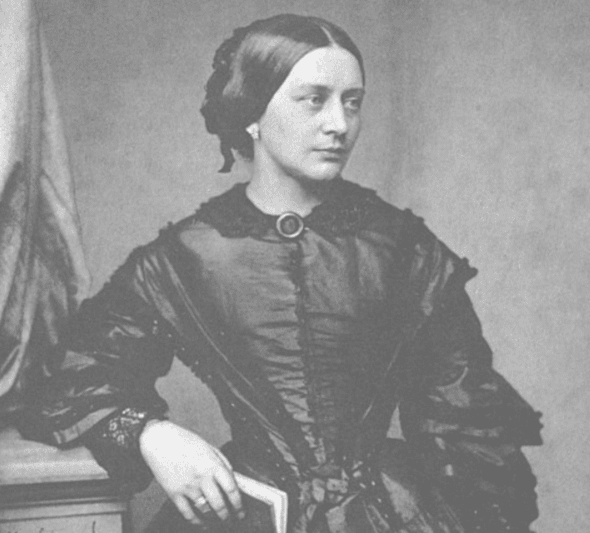
I am continually astounded by the breadth of Clara Schumann’s impact.
She was part of a circle in Leipzig that included Felix Mendelssohn, and of course, Robert Schumann, among many others. Mendelssohn admired her; he conducted when she premiered her Piano Concerto. He had her perform at the Leipzig Gewandhaus on a regular basis, sometimes two or three times per season.
She was in a fairly central musical place and was able to invite people to come into her home. She created a physical space and an atmosphere in which many musicians interacted and therefore created the new sound that they were all looking to find, post-Beethoven. The violinist Joseph Joachim became a part of that circle, for example. Clara played with him a great deal, and she wrote her beautiful Op. 22 Romances for the two of them to play together. Joachim also became very close friends with Brahms, completing this intergenerational circle. And he influenced the Brahms Violin Concerto, and therefore violin writing. That's all thanks to Clara at its core, to her bringing these people together.
I knew that she'd been a child prodigy, but I didn't realize that later in life she also became a sought-after interpreter of all the most important music of the day. In reviews at the time, she was not referred to as a woman, which was very rare. She was just spoken about in terms of how she played the music. In other words, she was accepted as a performer on a par with her male counterparts, which may partly explain why she then didn't feel she had to fight for herself in other circles, because in that one place, she did really find acceptance.
She was a brilliant programmer. Over her 60 years of public performances, she really had an impact on how people thought about putting together programs: What music belongs where? What are the kind of pieces to include? How do you build an effective emotional arc?
She may not have had an enormous influence as a composer for several reasons, the main one being that she didn't think she should. She was very conflicted about this. She wrote in her diary both (and I am paraphrasing here): “A woman shouldn't aspire to do this,” and also, “Wow, I love nothing more than composing.” She performed her own pieces all the time, so they were heard often during her own lifetime. But she never advocated for herself as a composer. For example, she dedicated her life after Robert’s death to making sure all of his music was carefully edited by herself and Brahms, but she took no such care with her own.
Teaching is one of the most important aspects of her legacy. She taught for close to a half-century, and pianists came from all over Europe and England to study with her. Because of her longevity as a teacher, she reached the most students over these decades, and her approach to sound, to tone, to lyricism, to cantabile playing, to the use of the hands, has continued in so many of our pianistic traditions to this day.
Clara Schumann’s legacy lives on in the work of her many students and the students who came after, her acclaimed concert performances, and her inventiveness in crafting concert programs, not to mention her compositions. Over a century later, her influences continue to affect our approaches to music.
Pianist Orli Shaham will be performing recitals inspired by Clara Schumann and her world in various venues in 2026 and beyond.